Filter and screen changes
Lift filter candles, screen baskets and rake tines and refit them correctly – usually overhead and in confined positions.
 rapidFOX
Sustainability
Company
Get in touch
rapidFOX
Sustainability
Company
Get in touch
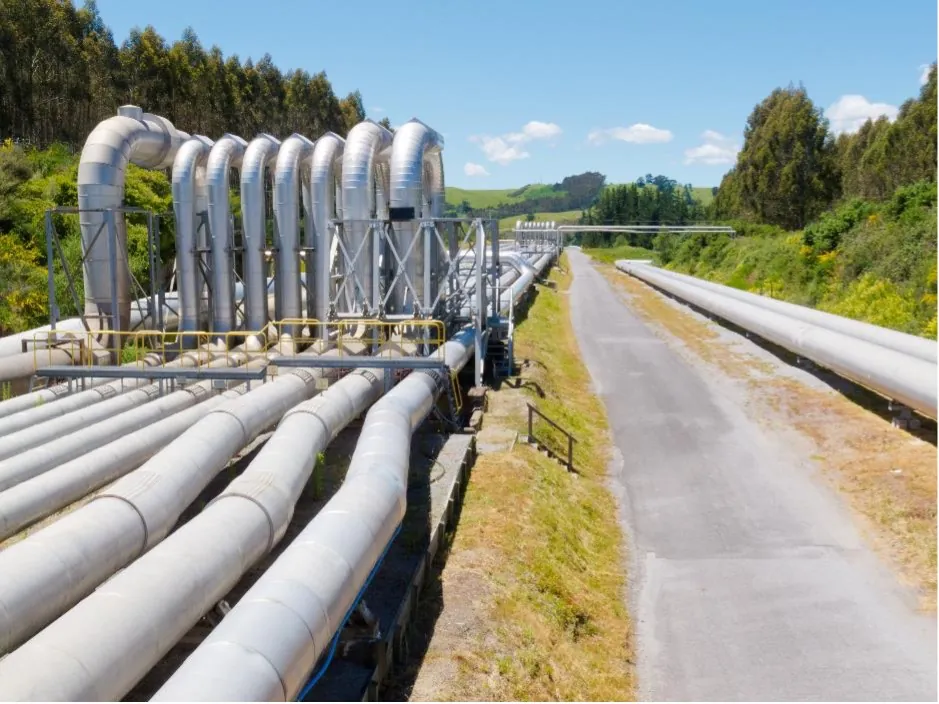
In power stations, treatment and processing plants, normal operation is automated – the manual work sits in maintenance and in faults. That is exactly where heavy parts are moved in awkward postures, under time pressure and often by two people. Handling technology turns these exceptions into predictable operations.
Typical handling tasks in Energy & environment — and what they demand technically.
Lift filter candles, screen baskets and rake tines and refit them correctly – usually overhead and in confined positions.
Remove, carry and refit pump casings, gates and valves during maintenance.
Place and replace modules in large-scale storage systems.
Handle components in wind and hydro plants during servicing.
Move precipitants, flocculants and cleaning agents in drums and canisters for dosing.
One unit on a mobile base plate for maintenance points visited twice a year.
In production every movement is set up: the station is built, the gripper fits, the height is right. In maintenance the opposite applies – the task comes once a year, in a place not made for it, under time pressure because the plant is down. That is why mobile units on a ballasted base plate are often the right answer here: they need no anchoring and can be used wherever work is happening.
Filter changes and valve work often take place above shoulder height. Assessment methods rate overhead work under load as particularly unfavourable, and the accident statistics agree. A manipulator holds the component in position while both hands are free to bolt – often the real gain, rather than the lifting itself.
We come from plant engineering: pipe stress analysis, pipe classes, control valves and safety devices have been our daily work for more than 25 years. That helps exactly where handling technology has to be fitted into an existing plant – because the question of where a unit may stand without touching the pipework then needs no second contractor.
Maintenance includes seeing things before they fail. Our thermographic scan finds hot terminals in switchgear, bearing damage on drives and insulation faults on pipework – during operation, without a shutdown. That is not handling technology, but it belongs in the same week.
Design, payload and reach — the shortlist for this industry.
The articulated arm that comes to the load.
View deviceMobile lifting axis for flexible lifting.
View deviceWeightless handling – floating instead of lifting.
View deviceArticulated reach meets weightless floating.
View deviceProcess plants – planned, built, documented and commissioned.
ViewLifting equipment, manipulators and balancers for industry, medical technology and logistics.
ViewRecurring inspection of your equipment to German accident prevention regulations.
ViewMaking heat loss in buildings and installations visible – before it gets expensive.
ViewYes. On a ballasted mobile base plate a unit can be used wherever work is happening – without drilling. The ballast weight follows from payload and reach; we calculate it for your task.
Yes, that is our starting point. We come from plant engineering and check clashes with pipework, platforms and access routes in the same CAD model the plant sits in. Where documentation is missing we capture the as-built condition by 3D scan.
Yes. We inspect lifting equipment and slings as a competent person under German industrial safety regulations and DGUV Rule 54, scheduled and fully documented in the inspection log.
It is not the payload that decides, it is the moment.
Read the articleOnce a year. And in the log, or it did not happen.
Read the articleThe second person is the most expensive line in the calculation.
Read the articleOne short conversation usually settles more than three quotations. Call or write — you will reach an engineer directly.
Start typing – for example “balancer”, “SAP” or “pipe stress”.
Reach Entracon
How can we help?
Thank you.